Build Something People Actually Want: A Founder's Guide to Validation
Most startups fail because founders build what they think is cool, not what people need. Here's how to validate your idea before you write a line of code.
Watch the Full Workshop
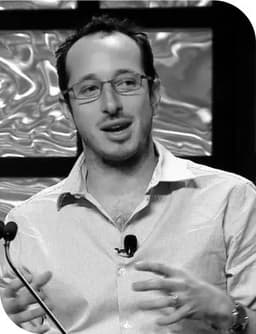
This article is based on a live founder workshop I did with Kingscrowd. Watch the full session below, or keep reading for the tactical breakdown.
The $2 Billion Lesson: Quibi
Quibi raised $2 billion from the biggest investors in the world. Jeffrey Katzenberg (Disney/Pixar legend) and Meg Whitman (HP CEO) teamed up to create mobile-optimized video. They blamed COVID for their failure. Worst excuse I've ever heard.
Where did they go wrong? Arrogance about what people want without any validity to that position. When you've had success, you develop this bias of how great you are. And who's going to argue with Katzenberg and Whitman? Nobody.
A $100 Survey Monkey could have saved them $2 billion.
"If you can't quantify your statement, if you can't die on the hill, then it's very difficult to get other people to."
There Is No Secret Recipe
When you hear the stories of incredible founders, you're hearing it through a cracked mirror. It's missing the gaps, the pain, and the warrior mindset.
Because there's no actual playbook to being successful. If there was, we would all be on a beach right now.
So you have to look at it differently. At the very beginning, you're trying to take incremental steps backwards from failure. The chance of failure on day one is probably rounded to the whole number 100%.
"You have to earn the right at every step. Earn the right to even have an idea. Earn the right to believe that idea has market potential. Earn the right to meet an investor. Earn the right to meet a customer. This journey is a privilege. You chose it."
What Should You Do First? Nothing.
There's a lot of predatory advice around what a startup founder should do first:
- Build a pitch deck
- Hire a company to do a financing model
- Hire an engineering team to build an MVP
- Pay for investor introductions
If you're a first-time entrepreneur without Silicon Valley noise telling you what's broadly correct, this all seems believable.
My view: Do as little as possible. There's no formula for a successful restaurant. Take an Iron Chef, put them on Rodeo Drive with incredible cuisine, well priced. It's not guaranteed to work.
But we can tell you 10 things that if you did any of them, you fail tomorrow: shitty service, shitty food, shitty prices, a rat. We know the commonalities that lead to failure. If you avoid those early, your journey to success gets clearer.
Get In Traffic
There is only one solution to validation: you have to get in traffic.
You have to repeat your idea again and again. Go to founder events that make you feel uncomfortable and awkward. Get in front of different people and different groups. Take off the Uggs, put on some shoes, and get out there.
You're not looking for people to say 'that's a great idea.' A million top hit ideas get that feedback. What matters is: will anyone actually change their behavior?
"What founders tend to be really good at is identifying the problem but then forgetting to focus on that and instead running to the solution. 'What we've built is...' Who gives a shit? Show me the person or show me the pain point that proves it."
Fame vs. Traction
If you have fame (being a subject matter expert in your space), you can say something and the likelihood of it being true can be taken at face value.
For everyone else, you need traction: some sort of proof that what you're saying is viably true and real.
Find me your first customer by name. Not your family or friends. Find me the random person who actually experiences pain and would pay to solve it.
Pay doesn't always mean money. It can mean time, clicking on ads, doing a thing. But if you solve the pain, will she pay for it?
Iterate 1,000 Times Before You Build
Now with cursor and vibe coding tools that have commoditized engineering, the race to MVP has gotten much quicker.
The great thing about these tools is they allow you to iterate in your head a thousand times. Before you hire your real engineer, you're on version a thousand.
"You're on version one right now. Don't build a line of code until you're on version 987 because it's free to do it in your head. It costs money to do it with an engineer."
The competitive advantage isn't that you can build. Everyone can now. The advantage is using these tools to iterate forward so you can prove it works.
Feature Soup Will Kill You
Early stage founders end up stitching different features they think compound into a better solution. If we add chat and social and ranking and leaderboard, those four things will compound and now the solution is 4x better.
It's not. It's now 10x worse.
How do you stay hyperfocused and hyper-aligned to the one thing you're committing to fix?
"The only metric that matters - OMTM. What metric moves if you win? If you can't tell me what that is, then I don't quite understand what we're doing here."
The Smoke Test
Once you've done iterations in Cursor or Lovable or any of these tools, you have a thing to show. Now you can start the smoke test.
Get a website up that has a screen and an iPad that looks like your solution. Looks like, feels like, is like, just doesn't exist yet.
I love it when founders put the web page up because it forces them to think about their H1. What is the title of your page going to say? Is it feature soup or are you talking about the outcome?
"Run an ad. Not as your huge acquisition strategy of millions. Like a hundred bucks. Do people resonate with the messaging? I don't care if they buy. Do they click the ad because something got them?"
Are You Getting Better?
The metric I believe everything starts with in the first year: Am I better as a founder?
That's more important than MRR at the beginning. Is the founder getting foundationally better?
- Are they able to talk about money without being weirded out?
- Can they pick up the phone instead of hiding behind their laptop?
- Are they more specific, better with time, better with strategy?
"We all know at the beginning you are the most unqualified CEO of all time. You might be the worst CEO the world has ever possibly seen. But you are the perfect CEO for your idea and your vision."
If you can't show me week on week that you're better than you were last week, the ceiling of the company is going to be the ceiling of your competency.
Signals Undeniable
When should you quit your job and go all in? When signals are undeniable.
I wish I could phrase that as quantitative or qualitative metrics, but it's not that clean. The market will tell you. An angel investor will tell you whether they give you money or not.
A lot of people when they quit their job think they quit to start the raise. That's where the failure happens. You don't quit to start the raise. You're willing to quit because the signals are undeniable.
"If they like your product, are they using it more today than they were 3 days ago? Can you track that to the only metric that matters? Signals undeniable is not people on the phone being like 'I really love what you've built.'"
Build a Tribe
You don't have to go alone. You need a tribe. It doesn't matter what your tribe looks like. You just have to have one.
Find people who can tell you why your idea is awful. Tell you why they wouldn't buy it. Tell you why they love it but wouldn't pay for it.
"For early stage founders, they don't have the counter-person who says 'no one's told you.' That's why people rely on shitty or predatory fundraising porn they find online, because there's no one else telling them anything."
If you have fame because you're a subject matter expert, you could go in the basement and vibe code it. If you don't, you are obligated to build a tribe.
Crowdfunding Is an Outcome
Going live on a crowdfunding platform is an outcome of you doing all the work, not a starting point.
You as a founder have no right to utter words like 'product market fit' or 'we're the market leader.' The market will dictate that for you.
"If you crowdfund and it fails, turns out you weren't ready. Fundraising is an outcome of doing all the work so that an investor can say yes."
The crowdfunding platforms are compliance marketplaces. They enable the transaction. It's not their job to drive investment. You've got to bring your network and work the deal.
Kiss a Lot of Frogs
A lot of early stage founders don't understand you have to kiss a lot of frogs.
They think 'you're a waste of my time, you're not my ICP, do you have money?' But the compound value of finding that one person who changes everything is infinite.
"I was upgraded on a flight to Germany. Started talking to a lady in the lounge. She introduced me to her husband who was the CEO of Nestle North America. They became my second client. If you don't take the opportunity, someone else will."
Do the card trick to 100 people who throw it away. You're going to find one person who says 'this is clever, I can give you six minutes.'
The Service Mindset
In my early years, I was ruthless. Stand on people's heads to get where you're going, this is what it means to be a CEO.
Very quickly you learn that doesn't work at all. And you pay the price for that, which is phenomenal because you never do it again.
"If you spend your life in service, the world will always come back and return it to you. Always. It might not be tomorrow, might not be next year, but the world will always return it to you."
People on my newsletter, I respond to everyone. I put my phone number in there. Under a thousand people texted me. Still crashed my phone. But I'm not giving my time for free. I get equitable value. I learn from every founder conversation.
Final Take: Stop Building, Start Listening
Too many founders go down a path with no ending. They spend money, whether their own or other people's, and end up where there's no path forward.
The fix is simple but not easy:
- Get in traffic
- Repeat your idea until it's sharp
- Find proof undeniable before you build
- Track the only metric that matters
- Build a tribe who will challenge you
- Earn the right at every step
"If you build it, no one gives a shit. That's the starting lineup. The market doesn't care about your secrecy or your features. It cares if you're solving something urgent, fast, and well."
Don't be Quibi. Do the $100 Survey Monkey first.
You also might like:
Can I Fire My Co-Founder?
You’re not crazy for asking. Firing a co-founder is rare, raw, and real—but sometimes it’s the only move. Here’s how to survive it.
How Startup Founders Use Reality Distortion Fields to Build the Impossible
Startup success demands more than logic-it demands bending reality. Learn how founders like Steve Jobs used Reality Distortion Fields to create markets, raise money, recruit talent, and defy the odds.
Continue Your Founder Journey
Explore all the resources available to help you build and scale your startup
Startup Frameworks Library
Subscribe to the Newsletter
Join 140,000+ founders getting exclusive strategies, frameworks, and founder stories every Sunday.
Get instant access to the 50-Step Founder Playbook downloaded over 1M times